

Peptides and Weight Loss: Science-Backed Guide to Fat-Burning Peptides
Quick Answer: Peptides And Weight Loss
Answer: Peptides may support weight loss by influencing appetite, metabolism, fat breakdown, muscle retention, insulin signaling, or growth hormone pathways. The strongest clinical evidence belongs to GLP-1 medications, while many research peptides have less human data. Safe use requires medical oversight, realistic goals, and attention to side effects.
This article is for educational and informational purposes only and does not constitute medical advice, diagnosis, or treatment recommendations for medical weight loss. Peptide therapies are medical interventions that need evaluation and supervision by a licensed healthcare provider. Never self-prescribe, self-give, or buy peptides from unverified sources. If you are under 18, pregnant, or breastfeeding, peptide therapies are not appropriate without strict medical justification.
QUICK OVERVIEW
Peptides for Weight Loss — What You Need to Know
- Peptides for weight loss are short-chain amino acid compounds that influence appetite, metabolism, and fat storage through specific biological pathways.
- GLP-1 receptor agonists (semaglutide, tirzepatide) can produce weight loss of 15–22% of body weight in clinical trials.
- AOD-9604 targets fat cells directly without growth hormone side effects — FDA GRAS status.
- CJC-1295 + Ipamorelin boost growth hormone for fat loss and muscle preservation.
- MOTS-c enhances mitochondrial function and metabolic flexibility — emerging research.
- All peptide therapies require medical supervision, proper sourcing, and lifestyle support.
What Are Peptides for Weight Loss?
Peptides for weight loss are short chains of amino acids — often between 2 and 50 amino acids in length — that act as signaling molecules in the body to influence body processes related to fat storage, appetite control, and energy output. Unlike proteins, which contain 50 or more amino acids folded into complex three-dimensional structures, peptides are small enough to be absorbed efficiently and bind to specific cellular receptors that control hunger hormones, insulin response, and fat body function.
The human body naturally produces hundreds of peptides that regulate everything from digestion to immune function. When researchers discuss weight loss peptides, they are referring to either synthetic versions of these natural compounds or modified analogs designed to amplify specific body effects. The most clinically major categories include GLP-1 receptor agonists (like semaglutide and tirzepatide), growth hormone-releasing peptides (like CJC-1295 and Ipamorelin), and fat-specific fragments (like AOD-9604) — each working through distinct natural pathways to support weight care.
What makes peptides very interesting for weight care is their targeted mechanism of action. Rather than broadly suppressing body function or acting as stimulants, peptides interact with specific receptors and hormonal pathways. This targeted approach means they can address the underlying natural drivers of weight gain — such as leptin resistance, impaired insulin signaling, or reduced growth hormone output. However, it is essential to understand that peptides are medical interventions, not supplements, and their use needs proper medical evaluation, prescription, and ongoing supervision.
How Do Peptides Help You Lose Weight?
Grasp how peptides help you lose weight needs examining the four main natural mechanisms through which these compounds influence body makeup. Each mechanism targets a different aspect of the complex body system that governs fat storage, energy use, and appetite.
-
1Mechanism 1: Appetite Suppression and Satiety Enhancement
GLP-1 receptor agonists like semaglutide and tirzepatide represent the most well-studied appetite-suppressing peptides. These compounds mimic the naturally occurring glucagon-like peptide-1 hormone, which your gut releases after eating. By binding to GLP-1 receptors in the hypothalamus, these peptides slow gastric emptying, increase feelings of fullness, and reduce neurological reward signals linked with eating, thereby curbing cravings. Clinical data from the STEP 1 trial showed that semaglutide reduced caloric intake by about 35% compared to placebo.
-
2Mechanism 2: Enhanced Fat Metabolism and Lipolysis
Certain peptides directly boost lipolysis — the biochemical process of breaking down stored triglycerides in fat cells into free fatty acids. AOD-9604 starts the beta-3 adrenergic receptor pathway to boost fat breakdown while simultaneously blocking lipogenesis (the creation of new fat). Growth hormone-releasing peptides like CJC-1295 and Ipamorelin work indirectly by boosting natural growth hormone production, which increases fat oxidation rates.
-
3Mechanism 3: Improved Insulin Sensitivity and Glucose Regulation
Insulin resistance is a major driver of weight gain and difficulty losing fat, very visceral (abdominal) fat. GLP-1 and GIP receptor agonists improve insulin response by enhancing glucose-dependent insulin secretion — helping the body produce the right amount of insulin at the right time, rather than the chronically elevated insulin levels that promote fat storage. Tirzepatide, which starts both GLP-1 and GIP receptors simultaneously, has shown very impressive results in improving glycemic control alongside weight loss.
-
4Mechanism 4: Growth Hormone Optimization and Body Recomposition
Growth hormone (GH) plays a key role in body makeup by promoting fat oxidation and helping to burn fat while preserving lean muscle mass and supporting muscle growth during caloric restriction, adding to overall anti-aging effects. After age 30, natural GH production declines by about 14% per decade. Growth hormone-releasing peptides like CJC-1295, Ipamorelin, and sermorelin boost the pituitary gland to release more natural growth hormone in natural pulses, supporting fat loss while preserving muscle — a process known as body recomposition.
Best Peptides for Weight Loss: Complete Comparison
Choosing the best peptides for weight loss depends on personal health goals, medical history, and the specific peptides and aspect of body function being targeted. The following full comparison covers the most clinically studied fat loss peptides.
Table 1: Comprehensive Comparison of Weight Loss Peptides
| Peptide | Category | Primary Mechanism | Clinical Weight Loss | Evidence |
|---|---|---|---|---|
| Semaglutide | GLP-1 Agonist | Appetite suppression, insulin sensitivity | 14.9% body weight (68 wks) | FDA Approved |
| Tirzepatide | Dual GIP/GLP-1 | Appetite suppression, glucose regulation | Up to 22.5% (72 wks) | FDA Approved |
| AOD-9604 | GH Fragment | Lipolysis stimulation, lipogenesis inhibition | Significant vs. placebo | Phase II / GRAS |
| CJC-1295 | GHRH Analog | Growth hormone release, fat oxidation | Body recomposition | Clinical Studies |
| Ipamorelin | Ghrelin Mimetic | Pulsatile GH release, lean mass support | Improved composition | Clinical Studies |
| Tesamorelin | GHRH Analog | Visceral fat reduction, GH release | Significant visceral fat ? | FDA Approved |
| MOTS-c | Mitochondrial | Metabolic flexibility, AMPK activation | Improved markers | Emerging |
| BPC-157 | Body Protection | Tissue repair, GI support | Indirect support | Preclinical |
AOD-9604: The Fat-Burning Fragment
AOD-9604 (Advanced Obesity Drug 9604) is one of the most discussed fat loss peptides in body research. This synthetic peptide consists of a modified fragment of human growth hormone — mainly amino acids 177 through 191 — with an added tyrosine residue. It was developed to isolate the fat-burning properties of growth hormone while removing its growth-promoting and possibly diabetogenic effects.
How AOD-9604 Works
The AOD-9604 peptide works through a mechanism distinct from GLP-1 agonists. Rather than suppressing appetite, it directly targets fat cells through the beta-3 adrenergic receptor pathway. When AOD-9604 binds to these receptors on adipocytes, it triggers two simultaneous processes: it boosts lipolysis and blocks lipogenesis. Importantly, unlike full-length growth hormone, AOD-9604 does not affect blood sugar levels or boost IGF-1 production, earning it FDA GRAS (Often Recognized as Safe) status.
Table 2: AOD-9604 vs. Other Fat-Targeting Peptides
| Feature | AOD-9604 | Tesamorelin | CJC-1295 + Ipamorelin | Full HGH |
|---|---|---|---|---|
| Fat Loss Mechanism | Direct lipolysis via ß3 receptor | GH-mediated visceral fat ? | GH-mediated fat oxidation | Broad metabolic |
| Affects Blood Sugar | No | Minimal | Minimal | Yes (diabetogenic) |
| Raises IGF-1 | No | Yes | Yes | Yes (significantly) |
| Muscle Preservation | Neutral | Moderate | Strong | Strong |
| Appetite Effects | None | None | Mild increase possible | Increase |
| Safety Profile | Favorable (GRAS) | Well-established | Good (limited long-term) | Significant side effects |
GLP-1 Peptides and Natural Alternatives
The glucagon-like peptide-1 (GLP-1) class of peptides, including liraglutide (marketed as Saxenda), has transformed the weight loss landscape more than any other category of body compounds in the past decade. Originally developed for type 2 diabetes care, GLP-1 receptor agonists like semaglutide and tirzepatide have showed unprecedented weight loss results in clinical trials.
Semaglutide: The Gold Standard
Semaglutide is a 31-amino-acid synthetic analog of natural GLP-1 engineered to resist enzymatic breakdown, extending its half-life to about 7 days. In the landmark STEP 1 trial (1,961 adults, 68 weeks), participants getting semaglutide 2.4 mg weekly achieved a mean body weight reduction of 14.9% compared to 2.4% in the placebo group. One-third of participants lost more than 20% of their body weight.
Tirzepatide (Mounjaro, Zepbound): The Dual-Action Powerhouse
Tirzepatide starts both GIP and GLP-1 receptors simultaneously. The SURMOUNT-1 trial (2,539 adults, 72 weeks) showed that tirzepatide at the highest dose produced a mean body weight reduction of 22.5%, with more than half of participants achieving at least 20% weight loss — results comparable to many bariatric surgical procedures.
Natural GLP-1 Support
For people interested in supporting natural GLP-1 production, research has identified several evidence-based strategies. High-fiber foods — very fermented fibers, resistant starches, and prebiotic-rich vegetables — boost GLP-1 secretion from gut L-cells. Specific foods shown to enhance natural GLP-1 levels include avocados, nuts, eggs, olive oil, fermented foods, and high-protein meals. Regular moderate-intensity exercise also increases circulating GLP-1 levels.
Peptides for Fat Loss and Muscle Gain
One of the most sought-after goals in body makeup tuning is simultaneous fat loss and muscle gain — body recomposition. Traditional caloric restriction often results in major muscle loss alongside fat loss. Certain peptides offer a unique advantage by promoting fat oxidation while preserving or building lean muscle tissue.
CJC-1295 and Ipamorelin: The Recomposition Stack
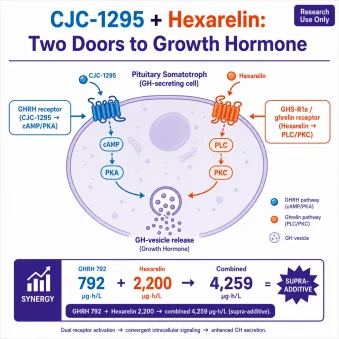
The mix of CJC-1295 and Ipamorelin is one of the most widely used peptide protocols for body recomposition. CJC-1295 extends growth hormone-releasing hormone signaling, while Ipamorelin boosts pulsatile GH release without greatly affecting cortisol or prolactin. Together, they produce sustained elevations in natural growth hormone that promote fat oxidation, support muscle protein synthesis, improve healing, and enhance sleep quality.
MOTS-c: The Mitochondrial Metabolic Peptide
MOTS-c is encoded by energy-cell DNA and starts the AMPK pathway — the body's "body master switch" — promoting glucose uptake, fatty acid oxidation, energy-cell biogenesis, and improved energy levels. Early research showed improved insulin response, reduced fat buildup, and enhanced exercise capacity.
How to Use Peptides for Weight Loss
Grasp the practical aspects of peptide therapy for weight loss is essential. Use method, timing, and protocol vary greatly between different peptides. All protocols should be set up and tracked by a licensed healthcare provider.
Injectable Peptides vs. Oral Peptides
Most clinically effective weight loss peptides are gave via under-skin injection — a shallow injection into fatty tissue beneath the skin. This provides the highest uptake and most predictable pharmacokinetics. GLP-1 agonists like semaglutide are available in both injectable and oral forms, though injectable versions often produce more consistent results.
-
1Subcutaneous Injection
The most common method. Uses a small insulin-type needle (29–31 gauge). Provides 90–100% uptake. Needed for CJC-1295, Ipamorelin, and tesamorelin.
-
2Oral Administration
Available for semaglutide (Rybelsus) and some AOD-9604 forms. Must be taken on an empty stomach. Lower uptake compensated by higher dosing.
-
3Sublingual / Nasal
Some peptides are being developed in sublingual or nasal spray forms. These bypass first-pass liver body function. Now limited supply.
-
4Reconstitution
Many research peptides are supplied as freeze-dried powder needing mixing with sterile water. Proper sterile handling and refrigeration are essential.
Peptides for Weight Loss: Men vs. Women
While the basic mechanisms of weight loss peptides are the same regardless of sex, important natural differences influence peptide selection, dosing, response rates, and side effect profiles.
Weight Loss Peptides for Women
Weight loss peptides for women must account for hormonal fluctuations across the menstrual cycle, fertility health impact, and body makeup differences. GLP-1 agonists show comparable effect in women and men, though women may experience slightly more gut side effects first. CJC-1295/Ipamorelin is often preferred for recomposition without androgenic effects. Women who are pregnant, planning pregnancy, or breastfeeding should not use peptide therapies.
Weight Loss Peptides for Men
Weight loss peptides for men often focus on addressing age-related decline in growth hormone and testosterone adding to visceral fat buildup. Tesamorelin is mainly studied for visceral fat reduction. Growth hormone-releasing peptides support the natural GH decline after age 30. AOD-9604 may be very effective for abdominal fat, as beta-3 adrenergic receptors are concentrated in visceral fat tissue.
Table 3: Peptide Considerations by Gender
| Consideration | Women | Men |
|---|---|---|
| Primary Fat Distribution | Subcutaneous (hips, thighs, arms) | Visceral (abdominal) |
| GLP-1 Response | Comparable; may have more GI side effects | Comparable; generally fewer GI effects |
| Best for Recomposition | CJC-1295 + Ipamorelin | CJC-1295 + Ipamorelin or Tesamorelin |
| Targeted Fat Loss | AOD-9604 (subcutaneous) | AOD-9604 or Tesamorelin (visceral) |
| Hormonal Considerations | Menstrual cycle, pregnancy, menopause | Testosterone decline, somatopause |
Safety, Side Effects, and What to Avoid
Grasp the safety profile and possible side effects of weight loss peptides is arguably the most important aspect of this guide. While peptides often have more favorable safety profiles than many pharmaceutical weight loss drugs, they are still bioactive compounds that carry risks.
Common Side Effects by Category
GLP-1 agonists: Nausea (20–44%), diarrhea (15–30%), vomiting (6–25%), constipation (10–24%). Often dose-dependent and diminish over 4–8 weeks. Rare: pancreatitis (<0.3%), gallbladder events.
Growth hormone-releasing peptides: Water retention, mild joint stiffness, tingling in extremities, increased hunger. Often transient and dose-dependent.
AOD-9604: Very favorable safety profile. Mild injection site reactions and occasional headache. No major differences from placebo in most safety parameters.
Who Should NOT Use Peptides
-
1
People under 18 years old — peptide therapies are not appropriate for minors
-
2
Pregnant or breastfeeding people — insufficient safety data; GLP-1 agonists contraindicated
-
3
People with history of pancreatitis — GLP-1 agonists linked with rare cases
-
4
People with medullary thyroid carcinoma (MTC) or MEN2 syndrome — boxed warning for GLP-1 agonists
-
5
People with active cancer — GH-releasing peptides that increase IGF-1 should be avoided
Natural Peptides and Complementary Strategies
Not everyone is a candidate for pharmaceutical peptide therapy, and even those who are can benefit from natural strategies that support peptide function and overall body health and wellness.
Foods That Naturally Boost GLP-1
High-fiber foods — very those rich in fermentable fibers like inulin, beta-glucan, and resistant starch — boost GLP-1 secretion from gut L-cells. Research found that diets rich in fermentable fiber increased GLP-1 levels by 25–30%. Key foods include avocados, almonds, pistachios, olive oil, eggs, leafy greens, fermented foods (yogurt, kimchi, sauerkraut), and omega-3 rich foods (fatty fish, flaxseeds, walnuts).
Lifestyle Strategies That Complement Peptide Therapy
- Resistance training (2–3+ sessions/week) — preserves lean mass, increases resting metabolic rate
- Adequate protein (1.2–1.6 g/kg/day) — supports muscle synthesis, enhances GLP-1 satiety effects
- Quality sleep (7–9 hours) — essential for GH secretion, appetite hormone regulation
- Stress management — reduces cortisol-driven visceral fat accumulation
- Regular moderate exercise (150+ min/week) — independently increases GLP-1 and insulin sensitivity
Ready to Explore Peptide Therapy?
PrymaLab provides research-grade peptides for licensed medical professionals and authorized research institutions. Consult a qualified healthcare provider to find if peptide therapy is appropriate for your goals.
Explore PrymaLab ProductsFrequently Asked Questions About Peptides for Weight Loss
Q: What are peptides for weight loss?
Peptides for weight loss are short chains of amino acids (2–50 amino acids) that influence body processes related to fat storage, appetite control, and energy output. The most studied include GLP-1 agonists (semaglutide, tirzepatide), growth hormone-releasing peptides (CJC-1295, Ipamorelin), and AOD-9604.
Q: Do peptides actually help you lose weight?
Yes. Semaglutide produced 14.9% body weight reduction in the STEP 1 trial (1,961 participants). Tirzepatide achieved up to 22.5% in SURMOUNT-1. Results vary by personal and work best with diet, exercise, and other positive lifestyle changes, alongside medical supervision, to achieve a successful and sustainable weight loss journey.
Q: What is the best peptide for weight loss?
It depends on goals: tirzepatide for maximum fat loss (22.5%), semaglutide for appetite suppression (FDA-approved), AOD-9604 for targeted fat reduction, CJC-1295 + Ipamorelin for body recomposition. Consult a healthcare provider.
Q: How do peptides help you lose weight?
Through four mechanisms: (1) appetite suppression via brain receptors, (2) enhanced fat body function/lipolysis, (3) improved insulin response, (4) growth hormone tuning for fat oxidation and muscle preservation.
Q: Are peptides safe for weight loss?
FDA-approved peptides (semaglutide, tirzepatide) have set up safety profiles. Common side effects include GI symptoms that diminish over time. Key: get only through licensed providers, start low doses under supervision, disclose all drugs.
Q: How long does it take for peptides to work?
GLP-1 agonists: appetite reduction in 1–2 weeks, 5% weight loss by 12 weeks, peak at 52–68 weeks. Tirzepatide: noticeable changes in 4–8 weeks. CJC-1295/Ipamorelin: 8–12 weeks. AOD-9604: 4–12 weeks.
Q: What is AOD-9604?
A modified fragment of human growth hormone (amino acids 177–191) that boosts fat breakdown and blocks fat creation via the beta-3 adrenergic receptor pathway, without affecting blood sugar or IGF-1. Has FDA GRAS status.
Q: Can you buy peptides over the counter?
Most effective weight loss peptides need a prescription. FDA-approved GLP-1 agonists are prescription-only. Some supplements (collagen peptides, BPC-157) are available OTC but have limited weight loss effects. Never buy from unregulated sources.
Q: What are natural peptides for weight loss?
Natural peptides include GLP-1 (produced in the gut), collagen peptides (supplements), and food-derived bioactive peptides. Foods that boost natural GLP-1: high-fiber vegetables, fermented foods, nuts, avocados, eggs.
Q: Is Ozempic a peptide?
Yes. Ozempic contains semaglutide, a 31-amino-acid synthetic analog of natural GLP-1. It's modified to last ~7 days (vs. 2–3 minutes for natural GLP-1). Ozempic is for diabetes; Wegovy is the weight loss form.
KEY TAKEAWAYS: Peptides for Weight Loss
- Peptides work through 4 mechanisms: appetite suppression, fat metabolism, insulin sensitivity, GH optimization
- Tirzepatide shows highest efficacy (up to 22.5% body weight loss), followed by semaglutide (14.9%)
- AOD-9604 offers targeted fat reduction without affecting blood sugar, appetite, or IGF-1 — FDA GRAS status
- CJC-1295 + Ipamorelin is the leading combination for body recomposition (fat loss + muscle preservation)
- GLP-1 peptides have the strongest clinical evidence with FDA approval and large-scale trial data
- All peptide therapies require medical supervision — never self-prescribe or use unverified sources
- Natural strategies (high-fiber diet, resistance training, sleep) can boost endogenous peptide production 25–30%
- Side effects are generally manageable and dose-dependent; GI symptoms most common for GLP-1 agonists
- Contraindicated for people under 18, pregnant/breastfeeding, and those with certain medical conditions
- Best results come from combining peptide therapy with nutrition, exercise, and behavioral support
This article is published for educational and informational purposes only and does not constitute medical advice, diagnosis, or treatment. Peptide therapies are regulated medical interventions that need evaluation, prescription, and supervision by a licensed healthcare provider. Personal results vary. Never self-diagnose, self-prescribe, or buy peptides from unverified sources. PrymaLab provides research-grade peptides for licensed medical professionals and authorized research institutions only. Persons under 18 should not use peptide therapies without strict medical justification.

References & Clinical Sources
- Wilding, J.P.H., et al. (2021). Once-Weekly Semaglutide in Adults with Overweight or Obesity. NEJM, 384(11), 989–1002.
- Jastreboff, A.M., et al. (2022). Tirzepatide Once Weekly for the Treatment of Obesity. NEJM, 387(3), 205–216.
- Heffernan, M.A., et al. (2001). Increase of fat oxidation and weight loss in obese mice by chronic treatment with human growth hormone or a modified C-terminal fragment. Int J Obesity, 25(10), 1442–1449.
- Teichman, S.L., et al. (2006). Prolonged stimulation of GH and IGF-I secretion by CJC-1295. J Clin Endocrinol Metab, 91(3), 799–805.
- Lee, C., et al. (2015). The mitochondrial-derived peptide MOTS-c promotes metabolic homeostasis. Cell Metabolism, 21(3), 443–454.
- Drucker, D.J. (2018). Mechanisms of Action and Therapeutic Application of GLP-1. Cell Metabolism, 27(4), 740–756.
- Nauck, M.A., & Meier, J.J. (2018). Incretin hormones: Their role in health and disease. Diabetes Obes Metab, 20(S1), 5–21.
- Falutz, J., et al. (2007). Metabolic effects of a growth hormone-releasing factor in patients with HIV. NEJM, 357(23), 2359–2370.
- Zdzieblik, D., et al. (2015). Collagen peptide supplementation improves body composition. Br J Nutr, 114(8), 1237–1245.
- Müller, T.D., et al. (2019). Glucagon-like peptide 1 (GLP-1). Molecular Metabolism, 30, 72–130.